

At blockdyor, we’re a bit extreme when it comes to Bitcoin. That’s why we put together this special guide listing the best Bitcoin-only wallets available today. And when we say Bitcoin-only, we mean it. Only companies fully focused on Bitcoin make the cut. No multi-crypto wallets here.
This guide is probably the most hardcore list you’ll find online. We break it down into mobile apps, desktop wallets, and hardware options, including both single-signature and multisig setups.
So you have some satoshis, but how should you store them safely in 2025? First off, leaving them on an exchange is risky. The same, old rule, still applies: not your keys, not your coins. If your BTC stays on an exchange, it’s effectively not yours.
Exchanges can get hacked, freeze accounts, block withdrawals, or take other actions that stop you from accessing your funds. We’ve seen this recently with several companies and it's probably going to happen again.
We’re here to help you find the right Bitcoin wallet for your needs. It might seem straightforward, but there are some details to think about:
- How much bitcoin do you have?
- Are you gonna spend them frequently or you are more like an HODLer? If yes, for how long do you plan to HODL?
- Are you confident your keys are safer with you than with a regulated custodian’s cold storage?
Let’s get started!
👉 Click here to get the Bitkey. Use code BITKEYBLOCKDYOR at checkout for an exclusive 10% discount.
Bitcoin as a Bearer Asset
Bitcoin acts like digital cash. Whoever controls the keys controls the coins. Unlike money in a bank account, there’s no middleman. If you hold your keys, you alone decide how your Bitcoin is used. That also means the responsibility is entirely yours.
Cryptography Basics
Bitcoin security comes from cryptography.
- Public key: Shared with others so they can send you Bitcoin.
- Private key: Kept secret, it proves ownership and allows you to spend.
Think of it like a locked box. The public key is the address where people can drop something in. The private key is the only way to open it.
 Kate Porter
Wallets and Ownership
A Bitcoin wallet generates your private key and from that, public addresses. When someone sends you Bitcoin, it goes to one of those addresses. To move or spend it, you need your private key. That key is your proof of ownership.
Custody Choices
If you don’t hold your keys, you don’t truly hold your Bitcoin. Leaving coins with exchanges or banks exposes you to loss, hacks, or seizure. On the other hand, managing keys yourself requires care and awareness.
Taking Control
Owning your keys gives you independence. It protects you from third-party failures and keeps your Bitcoin truly yours. Some people start with custodial services (like a Coinbase account) and later transition to full self-custody as they grow more confident.
Picking the Right Bitcoin Wallet: Balancing Security and Convenience
There’s no single wallet that fits everyone. Every choice sits somewhere between ease of use, security and the amount you intend to self custody. Before deciding, it helps to ask yourself a few questions.
1. How much are you storing?
Is it a tiny fraction of your net worth, or a life-changing amount? The bigger the stake, the more security should matter, even if that means extra hassle.
2. How often will you need access?
Think of Bitcoin like different kinds of accounts:
- Daily spending, like a checking account
- Savings you dip into occasionally
- Long-term holdings, closer to a retirement account
Your use case will point you toward the right setup.
Types of Bitcoin Wallets
Now, let’s break down Bitcoin wallets. They fall into two main categories: software wallets and hardware wallets.
- Software wallets run on your phone or computer and are usually divided into mobile apps and desktop programs.
- Hardware wallets are physical devices, which can be single-signature or multisignature setups.
This is a simplified view, but it gives a clear starting point for understanding your options.
Software Wallets
Software wallets store private keys on devices connected to the internet. They’re convenient but less secure, best for small amounts or frequent access.
1. Mobile Wallets
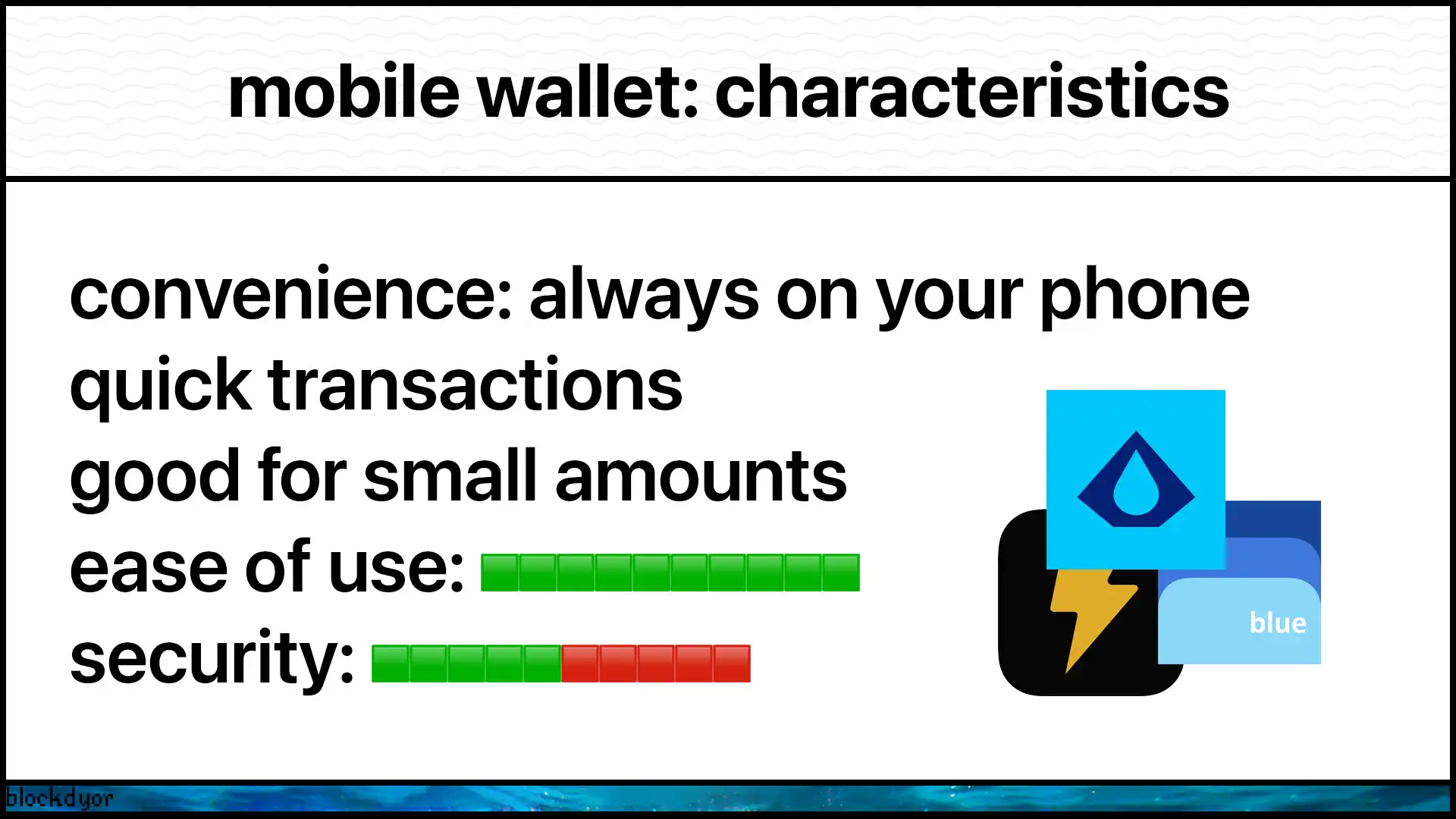
- What: Private keys live on your phone.
- Pros: Beginner-friendly, easy to use, convenient for spending.
- Cons: Least secure; phones are online and vulnerable. Not suitable for long-term storage.
The Best Mobile Wallet: AQUA Wallet
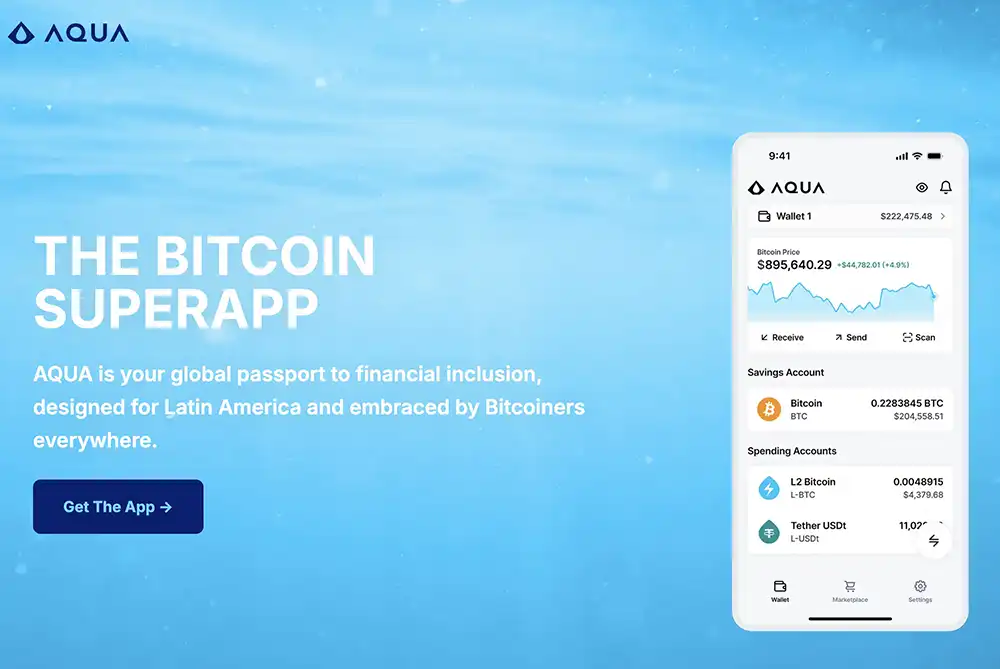
AQUA is our top pick because it’s a fully non‑custodial wallet built specifically for Bitcoin. It’s simple, intuitive, and supports Bitcoin, Lightning, and Liquid all in one app, making it easy to send, receive, and swap without extra complexity. Aqua gives you control of your keys while keeping the experience smooth for everyday use, which is why we recommend it above other mobile wallets.
 Andrea Carnimeo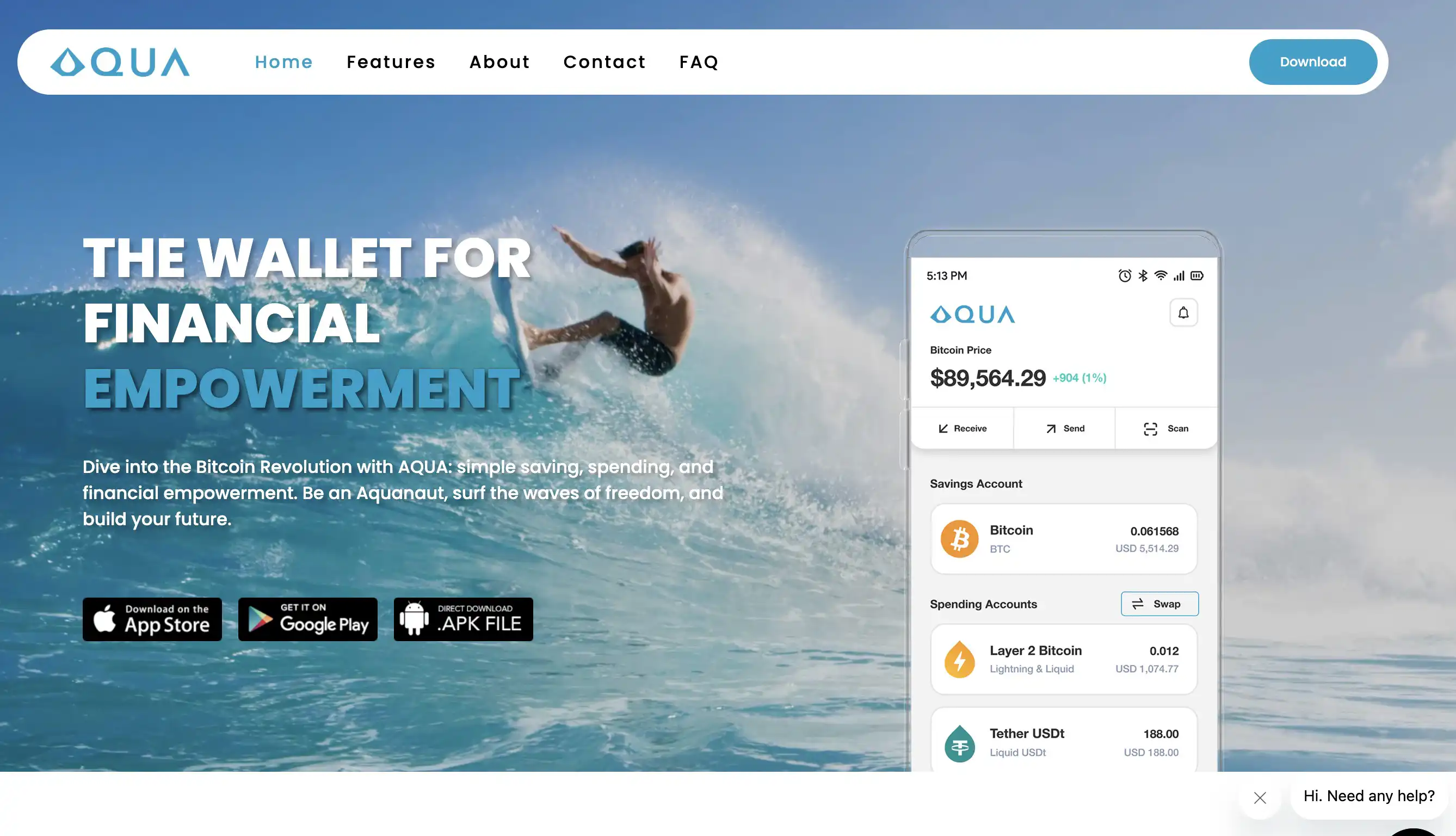
Other mobile wallets:
- BlueWallet
- Wallet Of Satoshi
2. Desktop Wallets
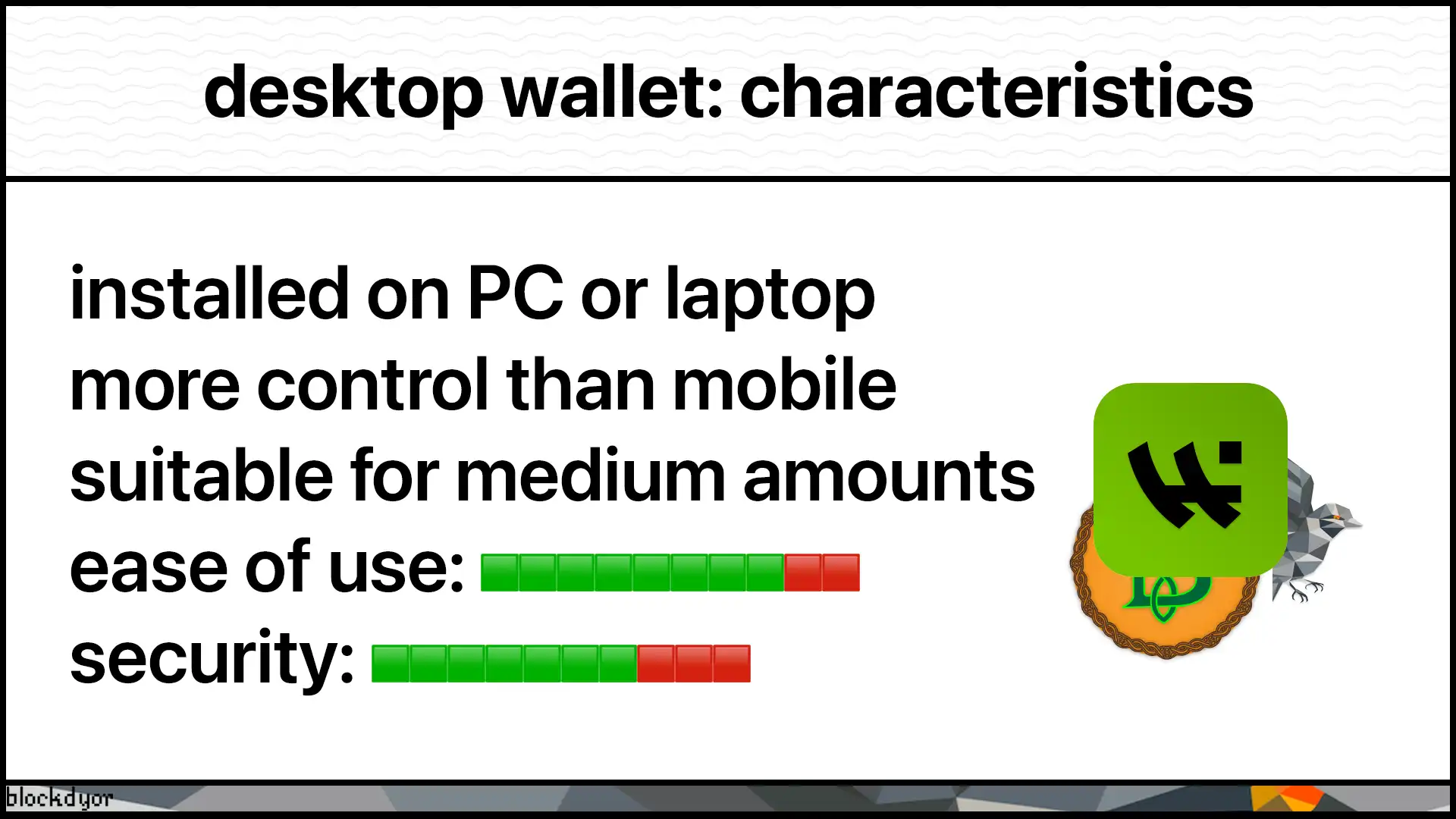
- What: Private keys live on your computer.
- Pros: Good user experience, convenient for spending, some allow connecting to signing devices for extra security.
- Cons: Computers are online and vulnerable; not ideal for long-term storage.
The Best Desktop Wallet: Wasabi Wallet
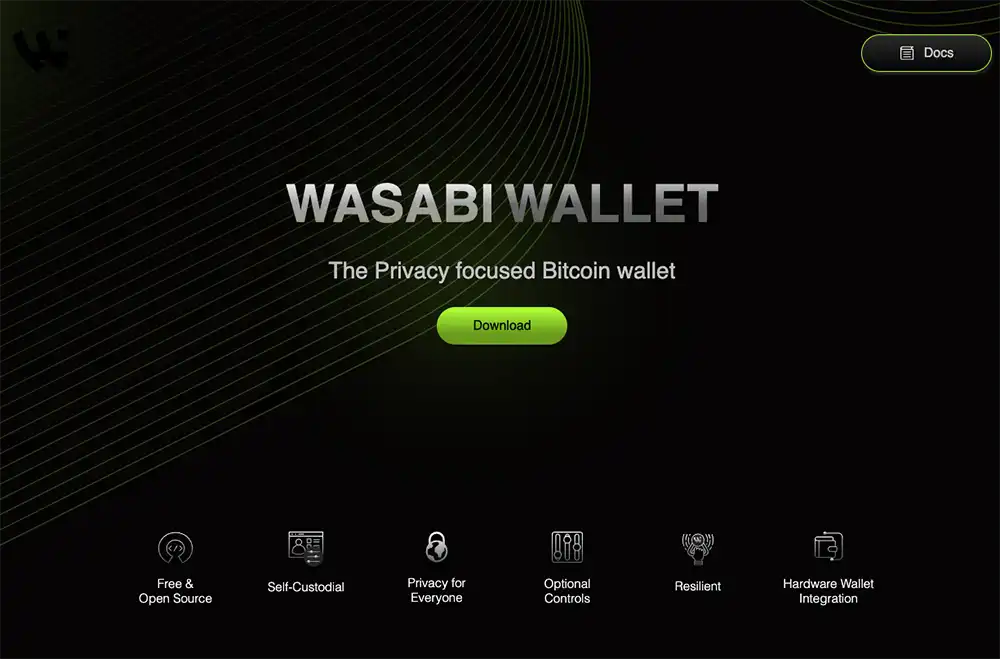
For desktop, our top pick is Wasabi Wallet. It stands out for its strong privacy features, especially coin control and coinjoin, all within a clean and easy-to-use interface. On top of that, it can optionally connect with popular hardware wallets like Trezor, ColdCard, Ledger, Blockstream Jade, and BitBox02.
Other desktop wallets:
- Sparrow Wallet
- Bitcoin Knots
Hardware Wallets
Hardware wallets store private keys offline on dedicated devices, providing strong security for long-term storage.
1. Single-Signature (Single-Sig) Wallets
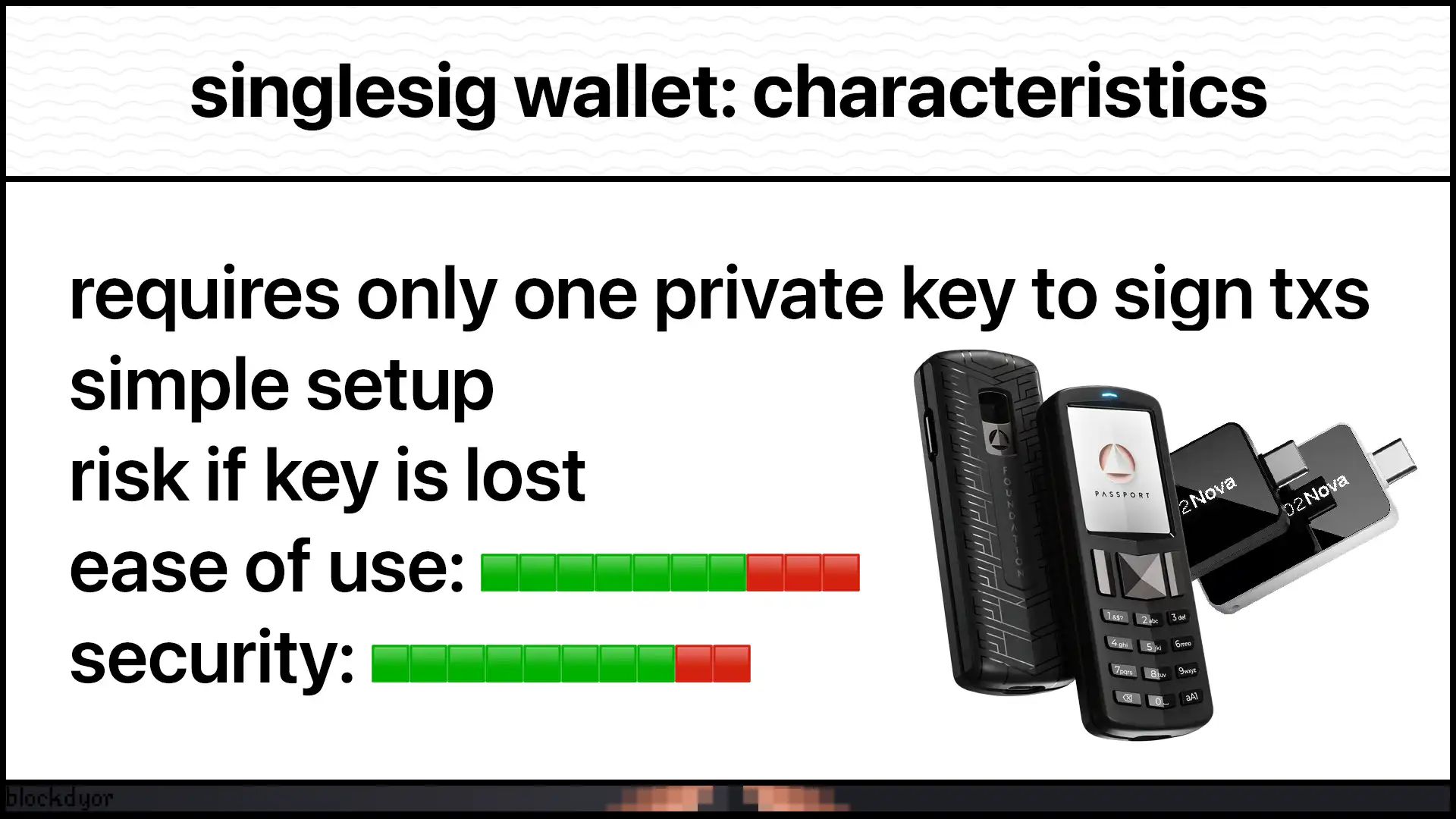
- What: Private keys on a single hardware device.
- Pros: Keys never touch the internet, secure for long-term storage, recovery phrase allows access if device is lost.
- Cons: Recovery phrase must be protected carefully; theft or loss of device can put funds at risk.
The Best Single Signature Wallet: Passport Core (blockdyor score 97/100)
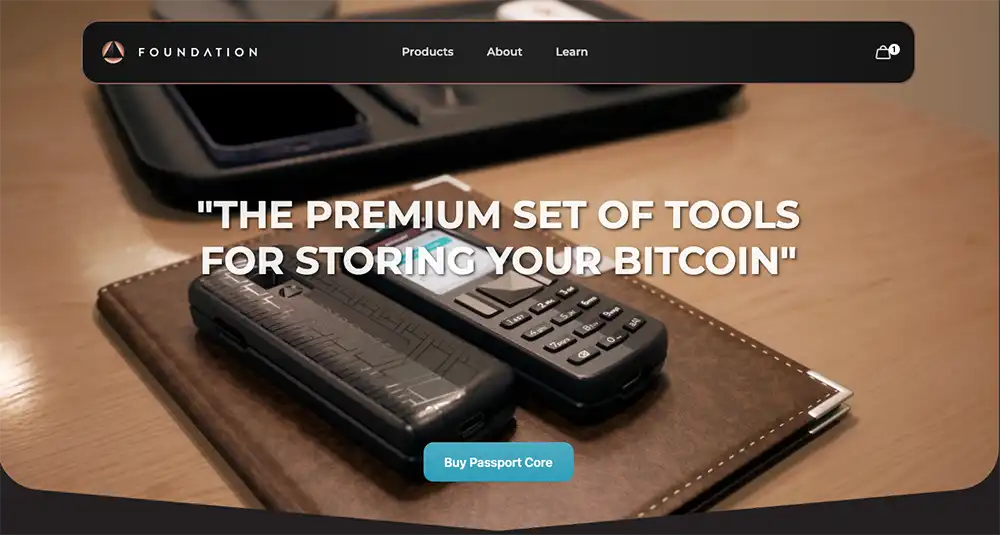
Our pick for the best single-sig hardware wallet is the Passport Core. Made in USA by Foundation, it’s fully airgapped, built only for Bitcoin, and scores top marks for security and ease of use. With a sharp display, intuitive interface, and broad compatibility with popular wallets and services, it outshines the competition despite its higher price.
Full Review:
 Andrea Carnimeo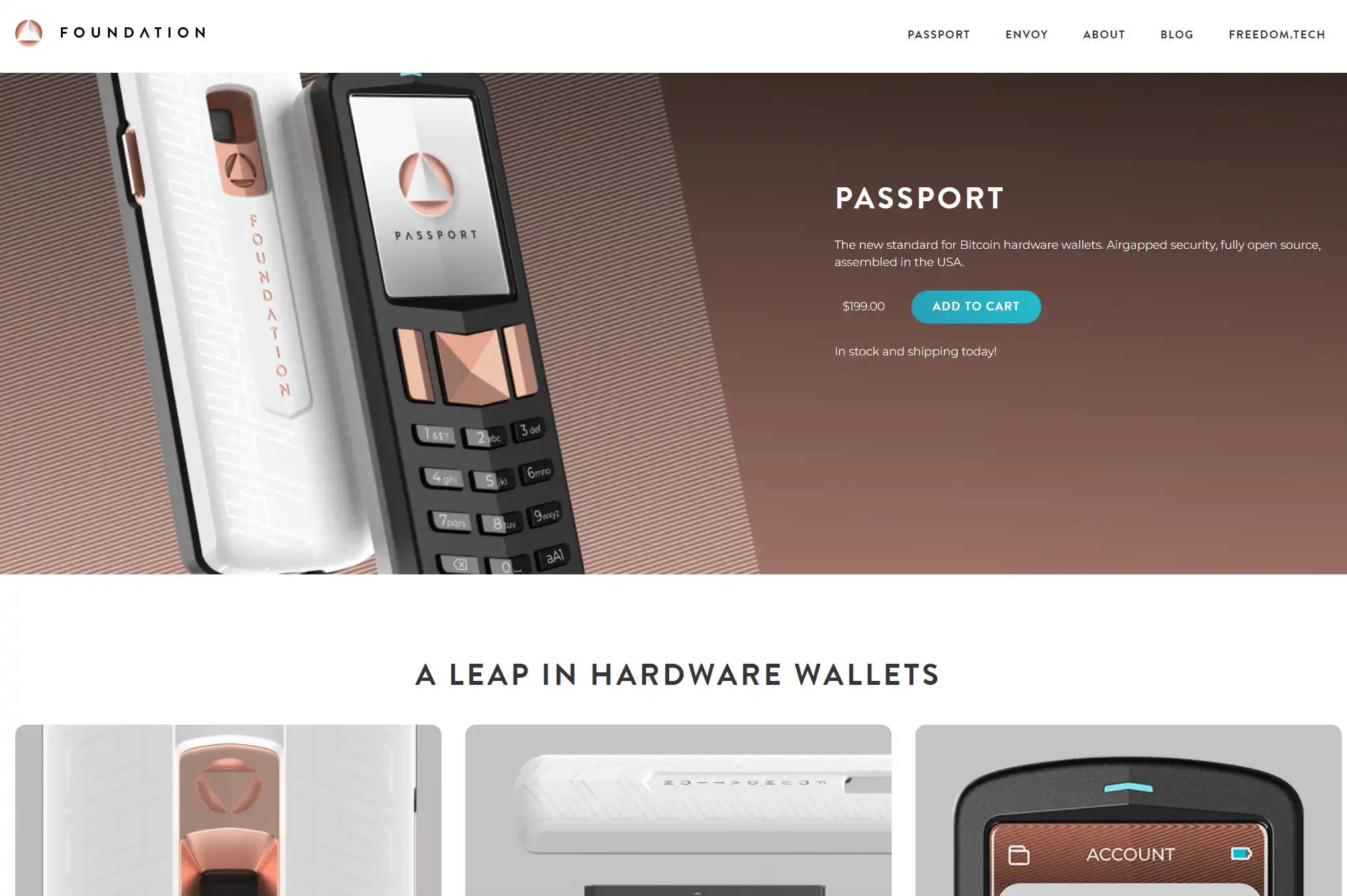
Other singlesig hardware wallets:
- BitBox 02 (93/100)
- Keystone 3 Pro (93/100)
2. Multi-Signature (Multi-Sig) Wallets
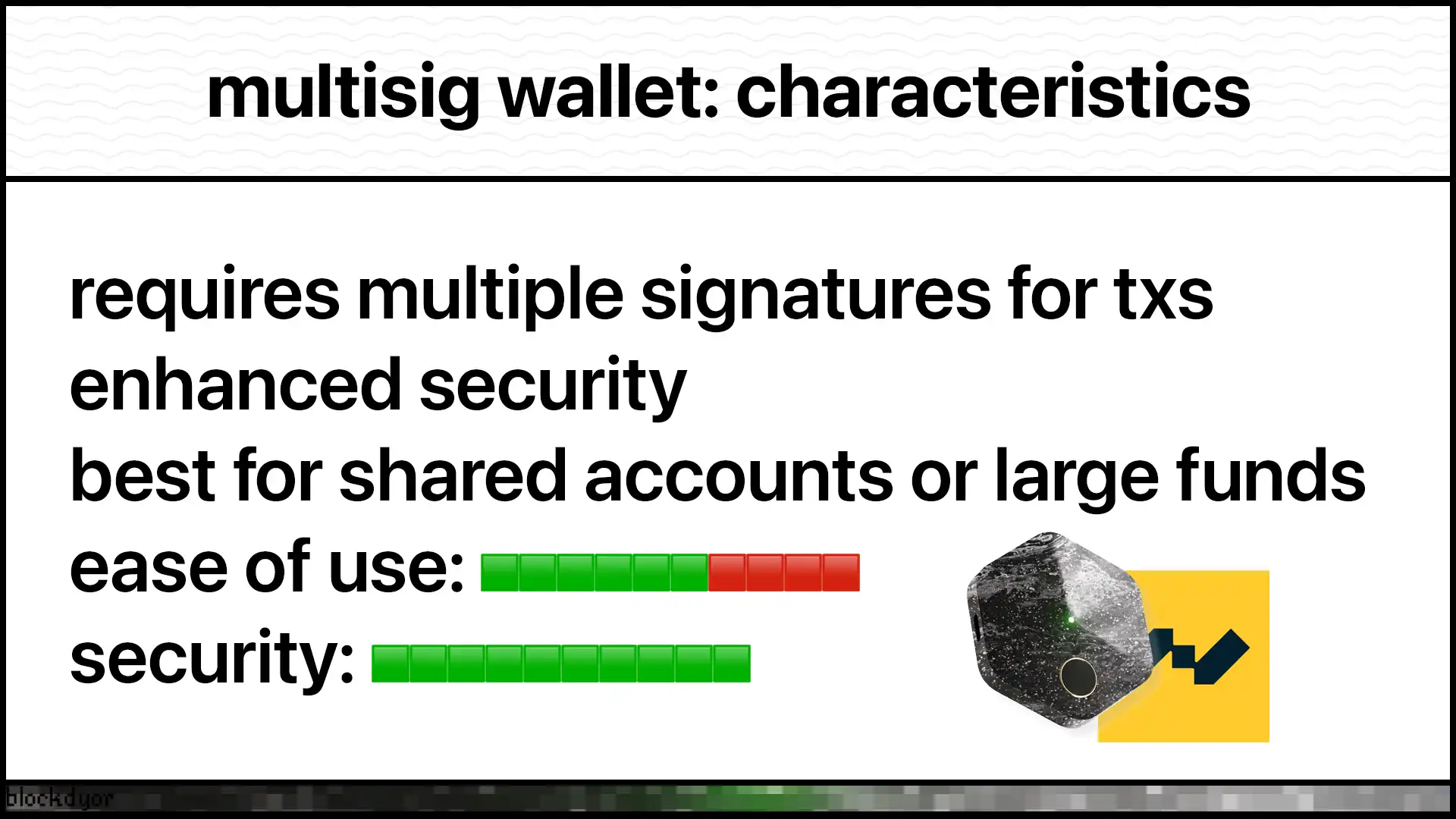
- What: Requires multiple private keys to approve a transaction (e.g., 2-of-3 setup).
- Pros: Very secure, resistant to theft, ideal for long-term storage.
- Cons: Some have complex setup and management, less convenient for spending.
The Best Multi Signature Wallet: Bitkey
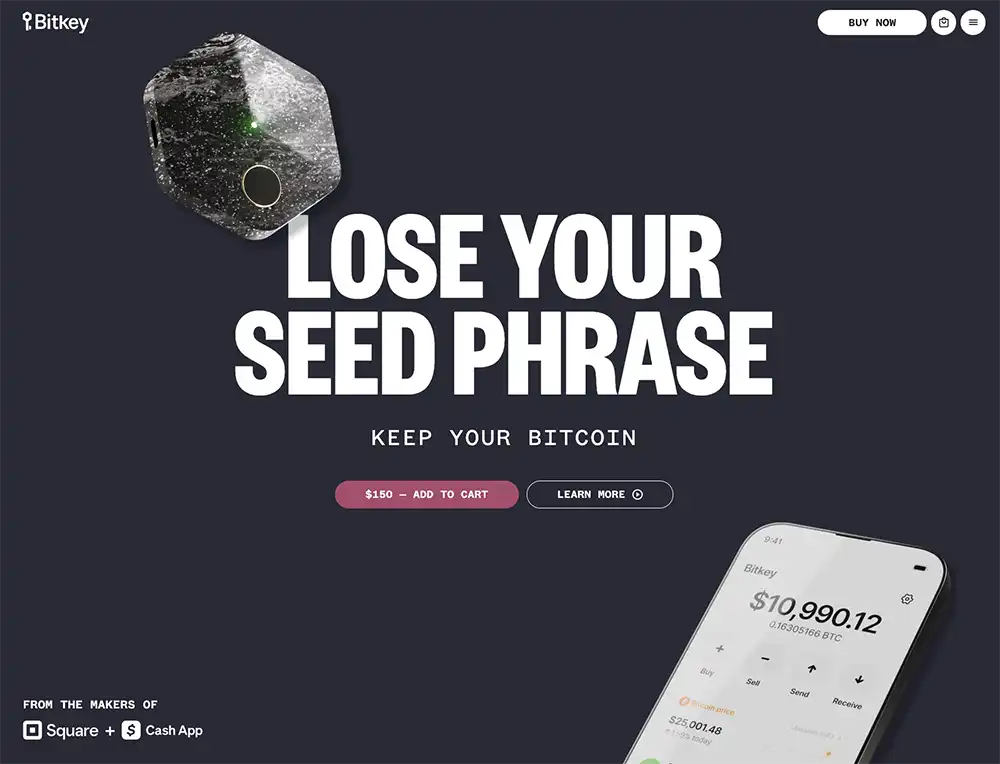
Bitkey is the best hardware wallet in all of our reviews, and the only one that truly revolutionized the space by making multisig easy and pleasant. It provides 2‑of‑3 multisignature security: your phone, the hardware device, and a server key. You hold two, so Bitkey alone can’t move your Bitcoin. No seed phrases to lose. Recovery tools are built in, including cloud backup, trusted contacts, and inheritance. Open-source, intuitive, and designed for safety without complexity, it ensures losing a device or phone doesn’t mean losing access.
👉 Click here to get the Bitkey. Use code BITKEYBLOCKDYOR at checkout for an exclusive 10% discount.
Full review:
 Andrea Carnimeo
Since Bitkey is unique in the industry, there aren’t really other multisig hardware wallets that work straight out of the box. Normally, you need a desktop wallet that acts as a multisig coordinator. It combines the public keys from all the selected hardware devices to create a wallet that requires multiple signatures (for example, 2-of-3) to spend.
A few examples of multisig coordinators:
- Liana: Lets you connect multiple hardware wallets (Blockstream Jade, Coldcard, and more) to build your own setup, whether 2-of-3, 3-of-4, or beyond.
- Sparrow Wallet: Another popular option for creating flexible multisig arrangements with different hardware devices.
Hot vs Cold Bitcoin Wallets
Knowing the difference between hot and cold wallets is key to keeping your bitcoin safe.
Hot Wallets
- Always connected to the internet
- Super convenient for daily spending and small amounts
- Less secure, more exposed to hacks and malware
Think of them like the cash in your pocket: handy, but not where you’d keep your life savings.
Cold Wallets
- Fully offline, never touch the internet
- Much harder for hackers to compromise
- Less convenient, but ideal for long-term storage
Most hardware wallets are cold wallets because they keep your private keys isolated on a device that doesn’t connect online directly. That’s why they’re considered the gold standard for safe storage.
Backup Seeds
Most wallets give you a seed phrase to write down. This is your lifeline if you lose access. If someone else gets it, they can take your Bitcoin, so protect it like you would a safe key.
Some setups skip seed phrases and use multisig instead, where security comes from splitting responsibility across multiple devices or services.
Multi-sig Wallets
Multisig means you need more than one key to approve a transaction. For example, in a 2-of-3 setup, you hold three keys but need any two to spend. Keeping keys in different places makes theft or loss less likely.
Some examples include:
- Bitkey (2-of-3)
- Nunchuck (DIY multisig wallets, 2-of-3, 2-of-4)
- Sparrow Wallet (DIY multisig wallets)
- Specter (DIY multisig wallets)
- Blockstream App (2FA Protected account) (2-of-2)
- Unchained Capital Vault (2-of-3)
Why Use Multi-Sig
Multi-signature wallets give you stronger protection and more control over your Bitcoin. The main benefits include:
- Safety Net Against Mistakes: In setups like 2-of-3, losing one key won’t lock you out. You can still access your Bitcoin with the remaining keys, reducing the risk of total loss.
- Protection from Coercion: Multi-sig makes it much harder for someone to force you to send funds, since multiple approvals are required.
- Spread Out for Security: Keys can be stored in different locations: home, office, or a secure vault, making it much tougher for attackers to access all keys at once.
- Extra Layer of Security: Requiring multiple keys to authorize transactions ensures no single point of failure can compromise your wallet.
In addition, thanks to Bitkey, in the past few years multisig is finally simple and user-friendly, removing the main barrier to adoption. There’s really no reason not to use it.
👉 Click here to get the Bitkey. Use code BITKEYBLOCKDYOR at checkout for an exclusive 10% discount.
Our Recommendation: Choose a Wallet Based on How Much Bitcoin You Hold
The easiest way to choose a Bitcoin wallet is to ask: How much of your wealth are you storing? The percentage of your net worth at stake should guide your choice.
Small Amounts (1-5% of Net Worth): Mobile Wallets
- AQUA Wallet: A beginner-friendly wallet for iPhone and Android. It’s simple, non-custodial, intuitive, and handles Bitcoin, Lightning, and Liquid seamlessly. Perfect for daily use and small amounts.
- BlueWallet: A straightforward, fully open-source, Bitcoin-only wallet that makes sending and receiving Bitcoin easy. Secure, simple, non-custodial, and ideal for small, frequent transactions.
Medium Amounts (5-10% of Net Worth): Hardware Wallets
- Passport: A high-security hardware wallet that keeps your keys offline. Air-gapped operation via QR codes or MicroSD, user-friendly interface, multi-signature support, and broad compatibility make it ideal for serious but manageable amounts.
- Bitbox 02 / Bitbox 02 Nova: A Bitcoin-only wallet fully open source, designed in Switzerland with security in mind. Features include secure element protection, PINs, tamper-evident design, multi-sig support and an easy to use companion app (third party apps supported too) both available for desktop & mobile. Excellent for maximum security even if you are a beginner.
Large Amounts (+10% of Net Worth): Multi-Sig Wallets
- Bitkey: Our top choice for storing significant amounts. It fully revolutionizes multisig, making it simple and user-friendly while offering maximum security. With a 2-of-3 setup, your funds are protected even if one key is lost or compromised. Open-source, intuitive, and designed so losing a device or phone doesn’t mean losing access, Bitkey removes any excuses for not adopting multisig.
👉 Click here to get the Bitkey. Use code BITKEYBLOCKDYOR at checkout for an exclusive 10% discount.
Bottom Line
Choosing the right bitcoin wallet comes down to balancing security, convenience, and the value you’re protecting. Small amounts are fine in mobile wallets, medium holdings deserve a hardware wallet, and large amounts should use multisig. Keep your keys safe, think long-term, and with the right setup, your bitcoin stays truly yours.