

Running a Lightning node gives you direct access to Bitcoin's Layer 2 payment network. You're holding real bitcoin in channels you control, not IOUs from a custodian. You can close channels unilaterally whenever you want. No one can freeze your funds or take unexpected cuts.
Beyond personal benefits, you're helping decentralize the Lightning Network. You earn small routing fees when payments flow through your channels. You get better privacy than standard Bitcoin transactions. And you keep complete control over your money.
But is it worth the effort? Let's look at what actually motivates people to run Lightning nodes.
Contributing to Bitcoin's Scaling Solution
Running a Lightning node isn't primarily about profit. It's about supporting functional infrastructure. The Lightning Network exists because individuals operate nodes, route payments, and maintain liquidity across the network. Without these operators, Bitcoin remains slow and expensive for everyday transactions.
There's real value in that contribution. You're helping Bitcoin scale to handle actual payments for regular users. You're part of the infrastructure making Bitcoin work as currency. For many operators, this purpose drives their participation. One early adopter described it as "a way of helping the network and having access to very low fee payments."
Decentralization matters here. Lightning nodes run independently. No central authority dictates operations. Each node manages its own channels and routing decisions. There's no single point of failure and no corporation controlling the network. Just individuals running their own infrastructure.
The Reality of Routing Fees
You can earn Bitcoin by routing payments. When transactions pass through your channels, you collect small fees. This is actual income, but we need realistic expectations.
The mechanism is simple. A payment enters through one channel and exits through another. You charge a fee for that routing service. If you price competitively, you become an attractive route for the network's pathfinding algorithms. Transactions flow through you. Fees accumulate.
Some early results looked promising. In 2019, one operator routing $10,000 monthly at 0.25% earned about $25. A mid-sized operator with 10 BTC in channels routing roughly 2 BTC daily reportedly made around 30,000 satoshis daily, about $300 monthly.
But profitability requires significant capital, consistent uptime, smart fee management, and deep understanding of network topology. The top 10 nodes control roughly 85% of public Lightning capacity. Small operators compete for what's left.
The community reports mixed results. One user noted that £1,000 won't generate meaningful profit. Another operator with a 2 BTC node in 2022 earned just $5 monthly. After accounting for server costs, on-chain fees for channel management, and electricity, most small operators barely break even.
Serious revenue flows to operators with large channels, strategic network positioning, and technical sophistication to automate channel rebalancing using tools like rebalance-lnd and charge-lnd. Hobbyists shouldn't expect significant income.
Privacy Advantages
Standard bitcoin transactions are permanently visible on the blockchain. Anyone can see addresses, trace UTXOs, and with sufficient chain analysis, connect transactions to identities. Bitcoin is pseudonymous, not anonymous.
Lightning operates differently. Payments aren't broadcast to the entire network. Only nodes directly involved in the payment path see the transaction. Sender and receiver remain private. Intermediate nodes only see their immediate neighbors in the route, not the full path or amount.
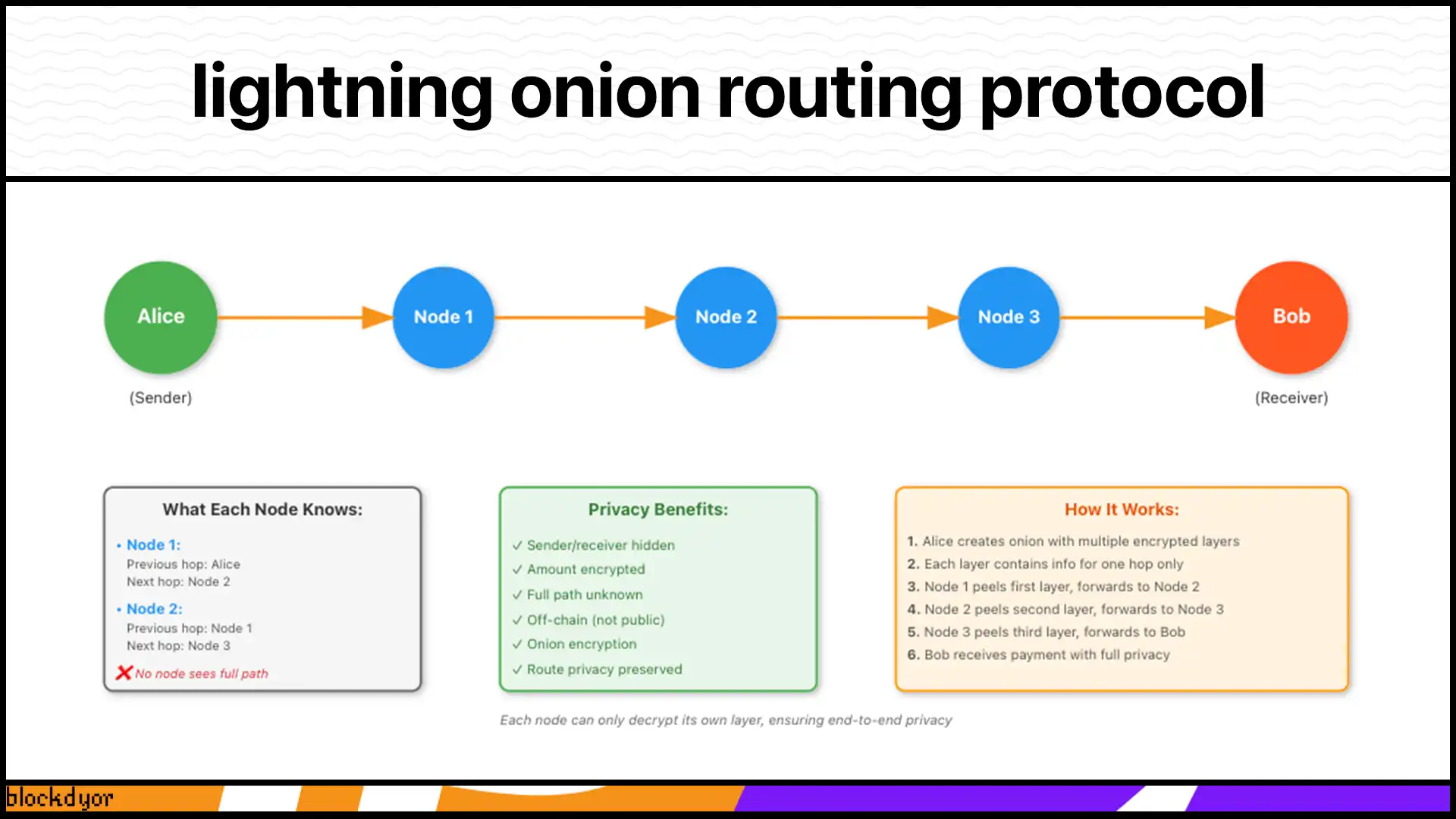
This privacy is fundamental to the protocol. Lightning uses onion routing, the same technique that protects identity in privacy networks like TOR. Each hop gets encrypted. No single party sees the complete picture.
Operating your own node strengthens this privacy. You control your data. You don't leak transaction information to block explorers or third-party services. You can route your node over Tor for complete network anonymity. Your balances stay private. Your spending patterns remain yours.
If privacy is important to you, self-hosting matters. You stop trusting custodial wallets or light clients that share your balance with their servers. You become your own bank in the fullest sense.
True Ownership
Custodial services offer convenience. Someone else handles infrastructure. You just log in and transact. But you don't actually control your bitcoin. They do. They can freeze accounts, get hacked, shut down, or face regulatory pressure.
A self-hosted Lightning node changes this equation. You control private keys. You manage channels. No one else can access your funds.
This matters during market volatility, regulatory uncertainty, or just normal operation. You're not dependent on a third party remaining solvent or cooperative. Your bitcoin stays under your control.
It requires more responsibility. You need secure backups. You must protect seed phrases. You need to maintain uptime and keep software updated. You need to understand that a Bitcoin Node is essentially a hot wallet, always connected to the internet. But that responsibility is the cost of genuine ownership.
Technical Learning and Customization
For developers and technically curious users, Lightning nodes offer significant flexibility. You choose your implementation. LND provides beginner-friendly tooling. Core Lightning runs efficiently on low-power hardware. Eclair targets development environments.
You can build custom applications on your node. Micropayment platforms. Tipping systems. Streaming monetization. The APIs are open and well-documented.
Your node can serve as personal infrastructure for other applications. File storage. Content hosting. You own and control the entire stack.
Dr. Martin Berger documented his experience setting up a Raspberry Pi Lightning node. He learned to use ThunderHub for monitoring, Balance of Satoshis for channel management, rebalance-lnd for liquidity optimization, and charge-lnd for dynamic fee management. The learning curve is steep, but understanding how complex distributed systems work provides real satisfaction.
The Complete Picture
Running a Lightning node involves genuine complexity. Installation can be straightforward using platforms like StartOS or UmbrelOS. But getting your node to route payments effectively requires more effort.
You need inbound liquidity to receive payments. You must understand channel balancing. Fee strategy matters. You need to monitor network topology and connect to well-positioned peers. Your node needs consistent uptime and synchronization.
Hardware costs money. So does electricity. Server hosting adds expense if you don't self-host. On-chain fees for opening and closing channels accumulate. Bitcoin locked in channels isn't available for other uses.
Time investment is substantial. Operators report spending weeks on initial setup and familiarization. Months learning channel management. Years optimizing routes and fees.
This isn't passive income, especially at small scale. You're actively monitoring, adjusting, and learning continuously.
Pros and Cons
| Pros | Cons |
|---|---|
| ✅ Complete control over your bitcoin with no custodian risk | ❌ Requires technical knowledge and ongoing maintenance |
| ✅ Enhanced privacy through onion routing and self-hosting | ❌ Significant time investment to learn and optimize |
| ✅ Earn routing fees from payment flows | ❌ Minimal profit for small operators without substantial capital |
| ✅ Support Bitcoin's scaling and decentralization | ❌ Hardware, electricity, and hosting costs |
| ✅ Deep understanding of Bitcoin's Layer 2 technology | ❌ Need consistent uptime and monitoring |
| ✅ Choose your own implementation and customize setup | ❌ On-chain fees for channel management add up |
| ✅ No third party can freeze or access your funds | ❌ Capital locked in channels unavailable for other uses |
| ✅ Build custom applications on open APIs | ❌ Competitive environment dominated by large nodes |
Should You Run One?
For profit at small scale? Probably not. You need significant capital, technical skill, and dedication to see meaningful returns. Most operators don't profit after expenses.
For supporting Bitcoin infrastructure? Absolutely. If you believe in Bitcoin's future and want functional payment networks, your node helps. You strengthen the network and improve resilience.
For privacy and sovereignty? Yes. You control your data and funds completely. No intermediary between you and your money.
For education? Definitely. You learn how Bitcoin actually functions at a deeper level. You see network effects in real time. You understand payment routing, channel liquidity, fee markets, and decentralized systems in ways that reading never achieves.
Running a Lightning node isn't for everyone. The barrier to entry has dropped, but it's still not trivial. You need some technical comfort, patience, and realistic expectations.
But if you care about Bitcoin, value privacy, want genuine control over your money, or enjoy working with advanced financial infrastructure, a Lightning node makes sense. You're not just using Bitcoin. You're building the system that makes Bitcoin work as actual money.
For many operators, that purpose is enough.