

When the german Meister WantClue, developer of AxeOS (the operating system inside every Bitaxe), joined forces with the British manufacturer DTV Electronics, renowned worldwide for their open source media servers and home miners, the collaboration produced something unprecedented. The BitForge Nano didn't just arrive on the scene; it transformed the home mining landscape entirely.

This wasn't merely notable because such a high-profile partnership had never occurred in the industry before. The device itself proved revolutionary: delivering more than double of the terahashes of the Bitaxe Gamma while being more efficient, quieter, and housed in an aesthetically pleasing box form factor. These qualities have captured the attention of the entire solo and home mining industry.
In this review, we'll explore the BitForge Nano in depth, examining what it is and how it performs and if it's the right choice for your home mining setup.
BitForge Nano: What It Is?
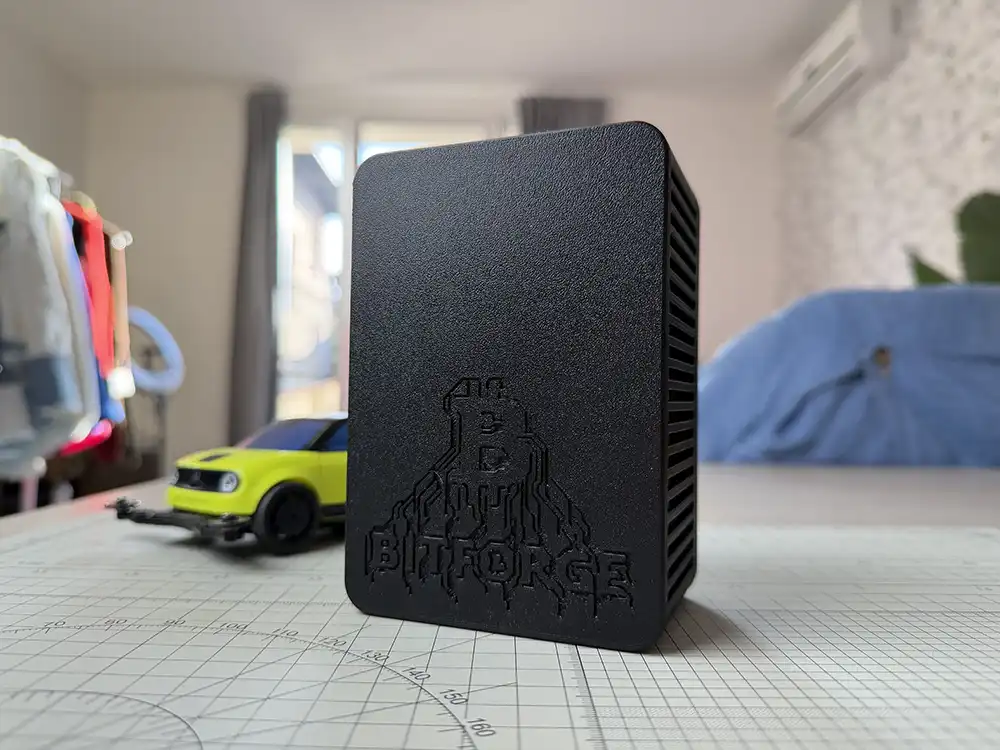
The BitForge Nano represents a significant milestone in open-source Bitcoin mining technology. Developed by Open Source Miners United (OSMU) and engineered in Germany, this device holds the distinction of being one of the first dual-chip ASIC miner available on the market. It's designed specifically for home and office environments, targeting solo miners, beginners, and experienced enthusiasts who want to participate in decentralized Bitcoin mining without the noise, heat, and complexity of industrial-scale equipment.
What sets the BitForge Nano apart is its commitment to open-source principles. Both the firmware and hardware are community-driven and freely available, allowing users to customize, modify, or even build their own versions at home. The device comes CE certified, ensuring it meets European safety and quality standards, a testament to the German engineering behind it.
The miner arrives in a custom-designed 3D-printed case that prioritizes both functionality and aesthetics. Unlike many mining devices that look industrial and out of place in a home setting, the BitForge Nano's box form factor blends seamlessly into any room. It's a plug-and-play solution that eschews unnecessary displays and gimmicks in favor of straightforward operation through the ForgeOS web interface.
How The Bitforge Nano Works
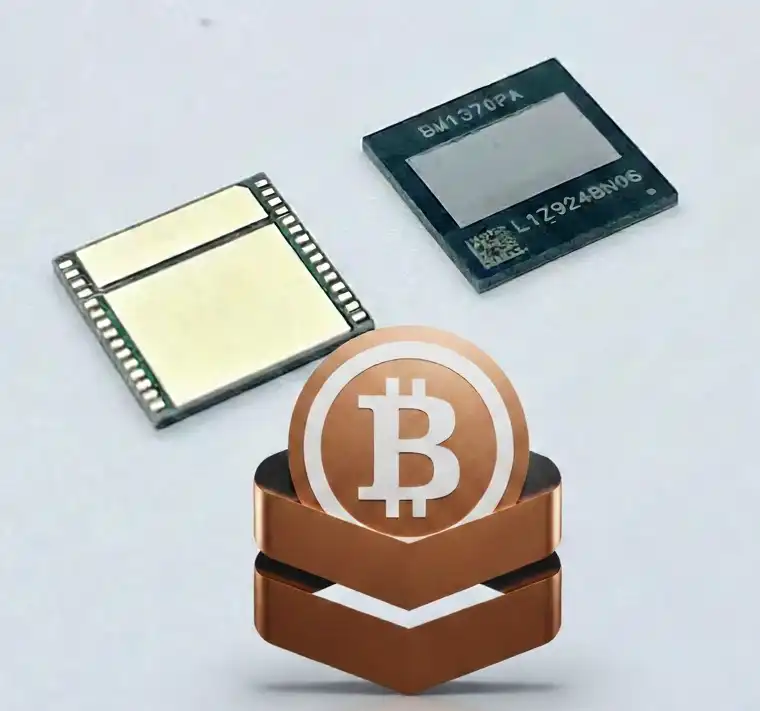
At its core, the BitForge Nano uses dual BM1370 ASIC chips, the same chips used in industrial mining equipment but configured for home use. These factory-new chips, work in tandem to deliver a combined hashrate that significantly exceeds single-chip alternatives like the Bitaxe Supra and Gamma.
The device is controlled by an ESP32-S3 microcontroller, which manages the mining operations and provides a fast, stable Wi-Fi connection. This removes the need for ethernet cables, making the setup remarkably clean and flexible. You can place the Bitforge Nano anywhere within Wi-Fi range without worrying about running network cables across your space.
Once powered on with the included power supply, the miner connects to your network and presents a user-friendly web interface through BitForgeOS. From this interface, you can configure your mining pool, adjust performance settings, and monitor your device's statistics, all without needing to install additional software on your computer.
The Bitforge Nano offers three distinct performance profiles, allowing you to balance hashrate against power consumption and heat output based on your preferences. Out of the box, it runs at 2.4 TH/s at medium mode, but you can adjust this from 2 TH/s for quieter, cooler operation, and up to 2.6 TH/s for maximum performance (though overclocking beyond manufacturer specifications voids the warranty).
For those interested in solo mining, attempting to find Bitcoin blocks independently rather than joining a pool, the Bitforge Nano makes this accessible. Based on 2026 stats, if approximately 50,000 Bitforge Nanos are operating worldwide at 2.6 TH/s each, the average time to find a block would be around 57 days. While this is a lottery-style approach to mining, it supports Bitcoin's decentralization and gives home miners a chance, however small, at the full block reward.
Bitforge Nano Features
Dual BM1370 ASIC Chips
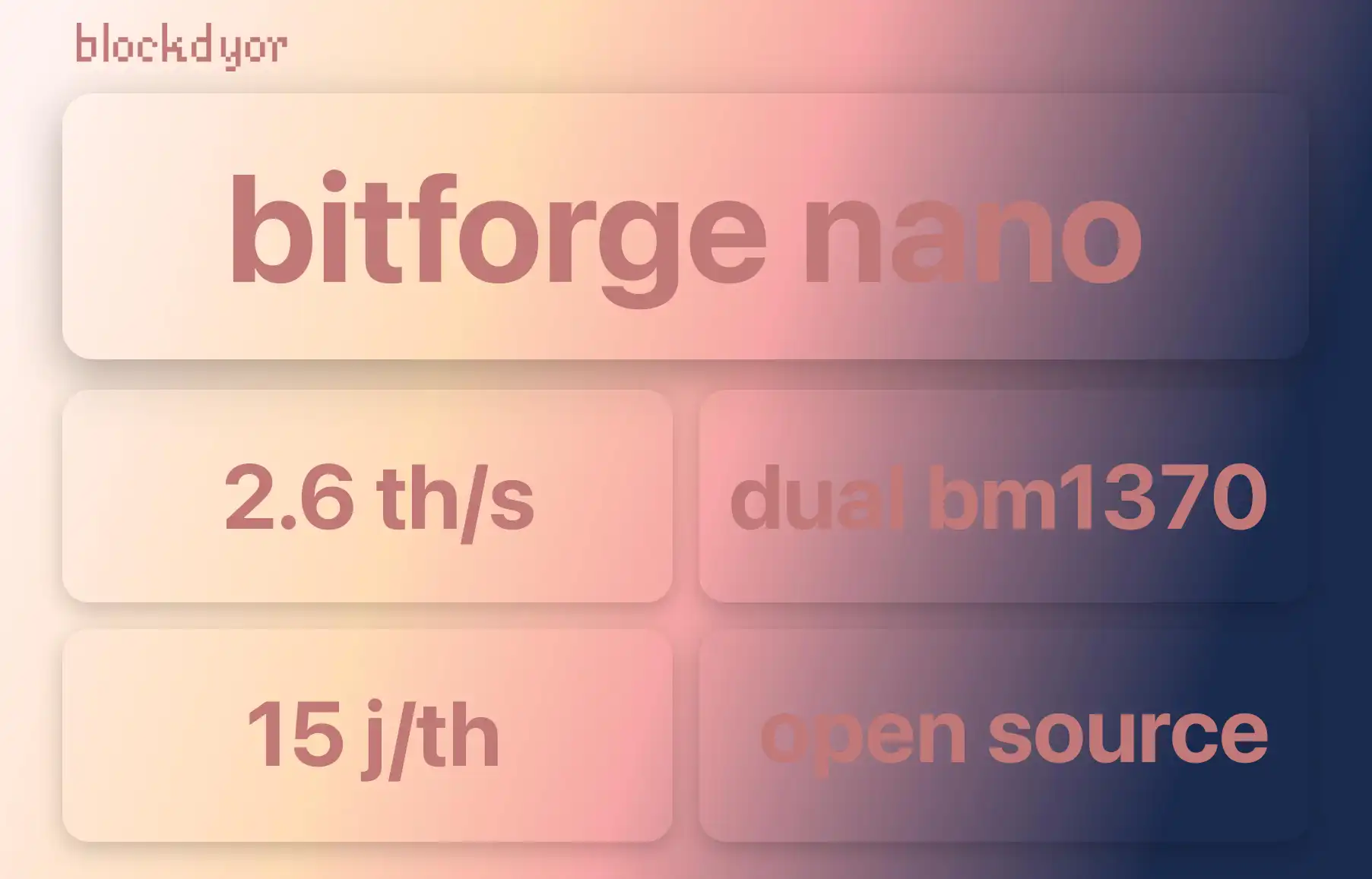
The defining feature of the Bitforge Nano is its dual-chip configuration. Using only factory-new BM1370 chips, the device achieves performance levels previously unavailable in the home mining segment. This dual-chip approach is what enables up to 2.6 TH/s hashrate that doubles the output of comparable single-chip devices.
Advanced Cooling System
The engineers behind the Bitforge Nano developed a specialized heat sink specifically for this device. The cooling concept uses two fans to create optimal airflow, with parallel cooling of the voltage regulator to ensure every component stays within safe operating temperatures. This perfected cooling design allows the dual chips to run efficiently while keeping noise levels reasonable and preventing thermal throttling that could reduce performance.
Custom 3D-Printed Housing
The housing isn't just functional, it's been designed to look professional and blend into home or office environments. The 3D-printed case is sturdy enough to protect the components while maintaining a compact footprint that won't dominate your desk or shelf.
Integrated Wi-Fi
Thanks to the ESP32-S3 microcontroller, the Bitforge Nano connects wirelessly to your network. This space-saving feature eliminates cable clutter and gives you flexibility in placement. Setup takes just minutes through the web interface, no technical expertise required.
Open-Source Firmware and Hardware
Both the BitForgeOS firmware and the hardware designs are open-source and available through the official GitHub repository. This means you can examine the code, suggest improvements, contribute to development, or modify the software to suit your specific needs. The open-source nature also ensures transparency and allows the community to audit security and performance continuously.
Three Performance Modes
Choose between efficiency and power:
- Eco mode: 2 TH/s for minimal power consumption and noise
- Standard mode: 2.2 TH/s out-of-the-box performance
- Performance mode: 2.6 TH/s for maximum hashrate
Simple Operation
There's no display, no buttons to fumble with, and no complex menus. The Bitforge Nano is operated exclusively through the clean, intuitive ForgeOS web interface accessible from any device on your network.
CE Certification
The device meets European safety standards, providing peace of mind that it's been tested and approved for home use.
Improvements Compared To The Previous Generation
When compared to the Bitaxe Gamma, one of the most popular home mining devices on the market, the Bitforge Nano represents a substantial leap forward in several key areas.
Hashrate Performance
The most obvious improvement is hashrate. While the Bitaxe Gamma delivers a respectable single-chip performance, the Bitforge Nano's dual BM1370 configuration produces up to 2.6 TH/s out of the box, more than double the Gamma's output. This isn't just a minor incremental improvement; it's a fundamental shift in what's possible for home miners. The ability to scale up to 2.6 TH/s in performance mode pushes this advantage even further.
Efficiency
Despite doubling the hashrate, the Bitforge Nano maintains excellent efficiency at 15 J/TH according to chip specifications. This means you're getting significantly more mining power without a proportional increase in your electricity bill. The Bitaxe Gamma is efficient for a single-chip device, but the Bitforge Nano's dual-chip optimization and advanced cooling system allow it to operate at competitive efficiency levels while delivering far more performance.
Cooling and Noise
The specially developed heat sink and dual-fan cooling system in the Bitforge Nano represents a significant engineering improvement. While the Bitaxe Gamma can run warm and occasionally loud under stress, the Bitforge Nano's perfected cooling concept with parallel voltage regulator cooling ensures optimal heat dissipation across all components. This results in more stable performance and quieter operation, even when pushing the device to its limits.
Form Factor and Aesthetics
The Bitaxe Gamma has an open, exposed design that showcases its components but can look industrial. The Bitforge Nano's custom 3D-printed box housing offers a more refined, professional appearance that's designed to blend into home and office environments. This might seem superficial, but for devices meant to run 24/7 in living spaces, aesthetics matter.
Market Positioning
The Bitforge Nano holds the distinction of being the first dual-chip ASIC miner on the market. This isn't just a marketing claim, it represents genuine innovation in the home mining space. While the Bitaxe Gamma proved that home mining could be accessible and efficient, the Bitforge Nano proves it can also be powerful.
Setup and Management
Both devices offer web-based interfaces, but the Bitforge Nano's ForgeOS has been developed specifically for dual-chip management and offers three distinct performance profiles out of the box. The ESP32-S3 microcontroller provides faster processing and more reliable Wi-Fi connectivity than previous generation controllers.
BitForge Nano Quick Review
| Category | Feature | Score |
|---|---|---|
| 🔐 Profitability and Performance (45/50) | ||
| 💰 Efficiency | 15.38 J/TH (40W ÷ 2.6 TH/s) | 7/10 |
| 💵 Economic Efficiency | 96.15 $/TH ($249.99 ÷ 2.6 TH/s) | 8/10 |
| 📈 Interest Ratio | 1,478.87 (15.38 × 96.15) | 3/5 |
| 💹 Price Weighted Interest Ratio | 369.57 (15.38 × 96.15 × 249.99) ÷ 1000 | 3/5 |
| 💡 Monthly Electric Bill | $4.32 (40W × 24h × 30 days × $0.15/kWh ÷ 1000) | 5/5 |
| ⛏️ Hashrate | 2.6 TH/s | 5/5 |
| ⚡ Power Consumption | 40 W | 5/5 |
| 💲 Price | $249.99 | 4/5 |
| 🚀 Features (45/50) | ||
| ✔️ Compatibility | Can mine every SHA 256 and connect to most pools | 5/5 |
| 📶 Connectivity | Wi-Fi only, lacks Ethernet | 4/5 |
| 📏 Form Factor | Compact 3D-printed box design | 5/5 |
| 🔊 Noise | ~30 dB (dual-fan cooling system) | 5/5 |
| 🔄 Open Source | Open Source Hardware & Software | 5/5 |
| ⛏️ Solo Mining | Supports Solo Mining pools | 5/5 |
| 🌡️ Heat | Front exhaust air reaches 40-50°C | 5/5 |
| 🤝 Support | Website (osmu.xyz) & Community support | 5/5 |
| 📜 Warranty | 1 year warranty (overclocking voids it) | 3/5 |
| ⏳ 3yr Possession Cost | $405.51 ($4.32 × 36 months + $249.99) | 4/5 |
| 🧱blockdyor Score (90/100) |
Bitforge Nano Teardown
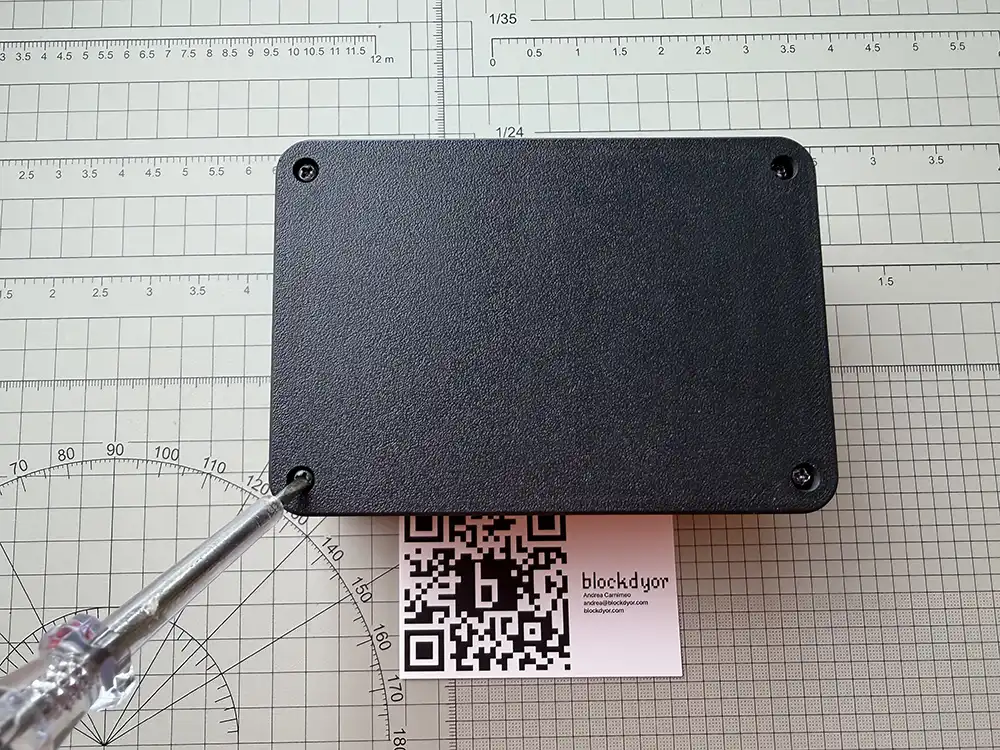
Tearing down your miner should a routine to remove the dust that accumulates after some time, and doing so on the Bitforge Nano it's quite simple as it just removing 4 screws from the bottom.
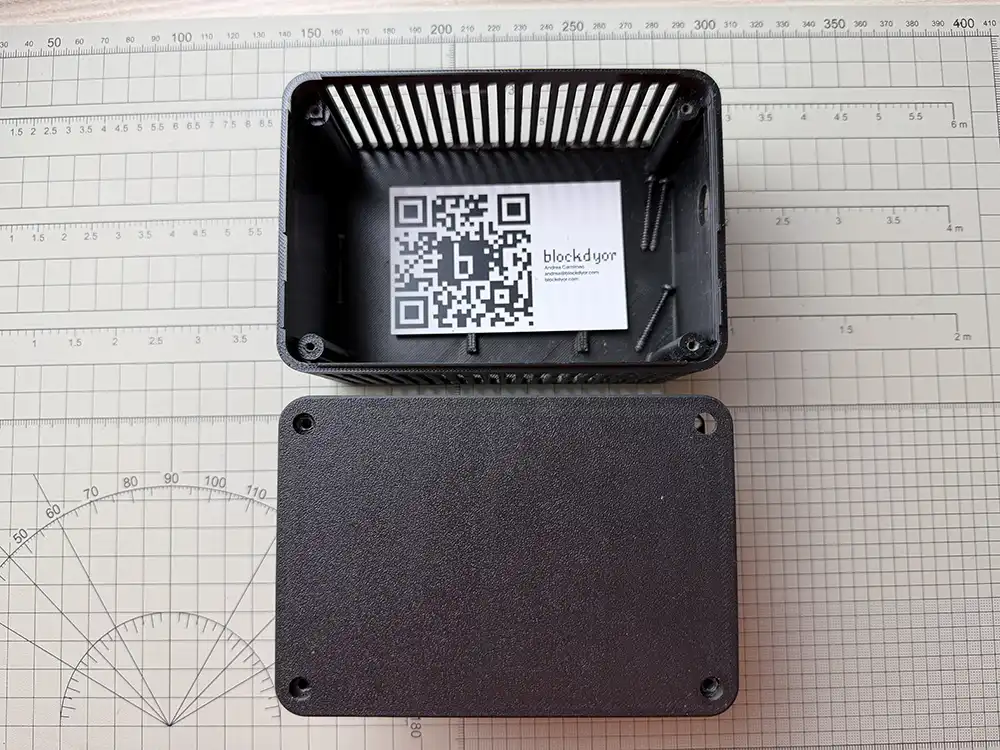
When the screws are removed, the upper part will slide away as the chassis is anchored to the lower part of the case.
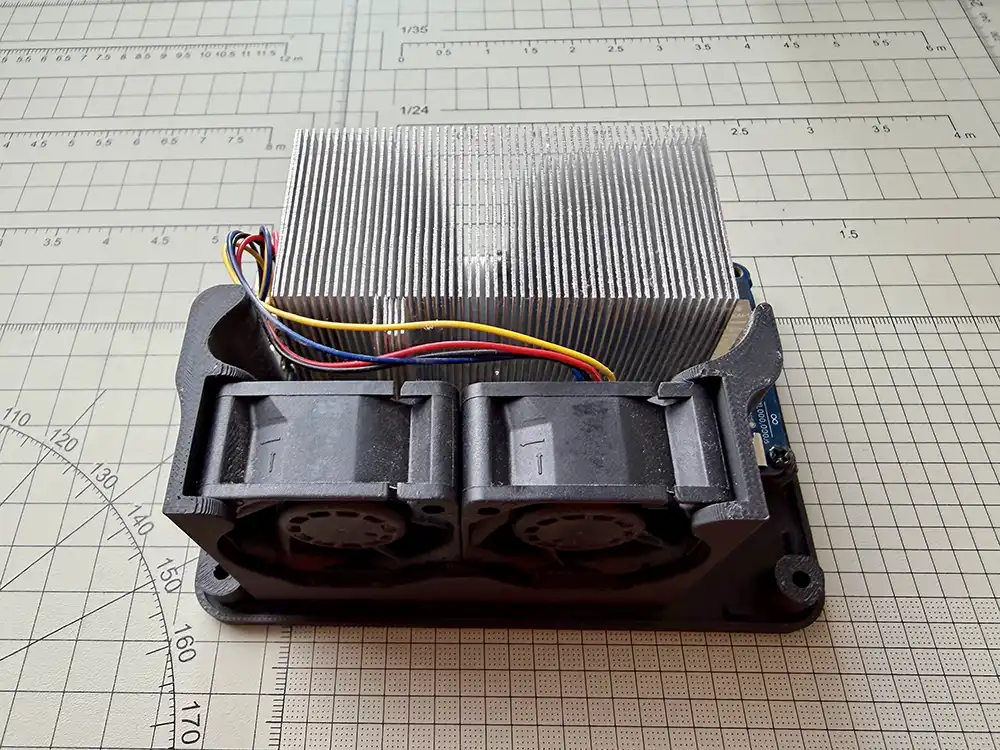
Here's the chassis, nevermind the dust as before doing this review I have been using the miner for around one month solo mining for testing purposes. There are two 40x20mm 12 volt PWM fans that blows cool air into a massive heatsink. This guarantees always cool operation at around 50-60 degrees celsius. There is no wasted space inside the device, everything is optimized for mining and forms follows function.
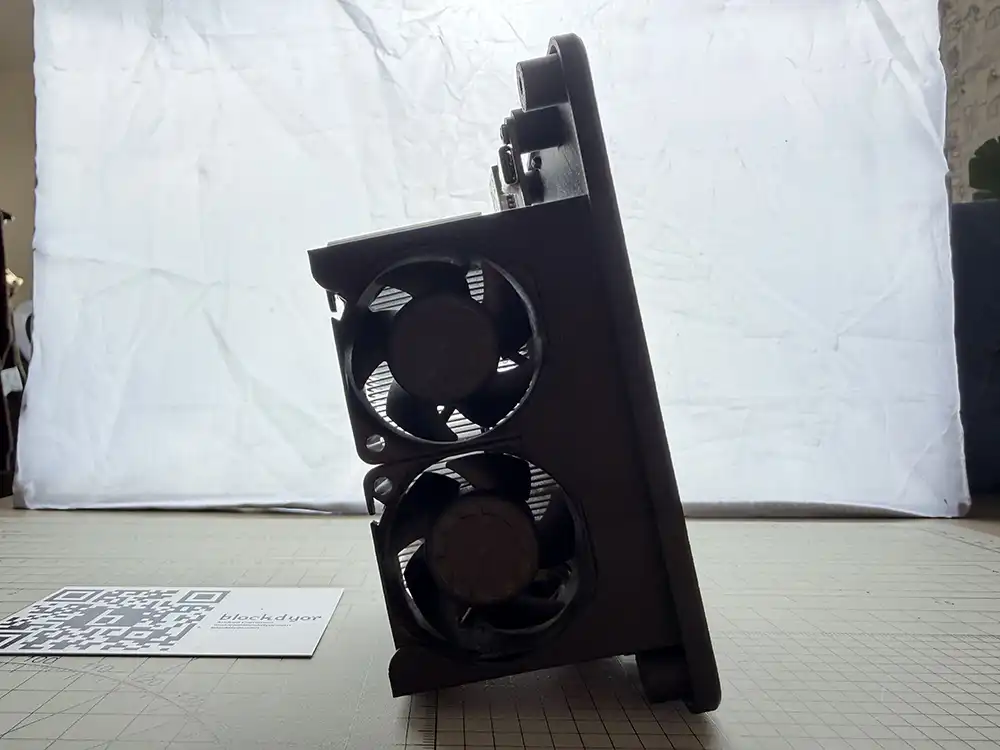
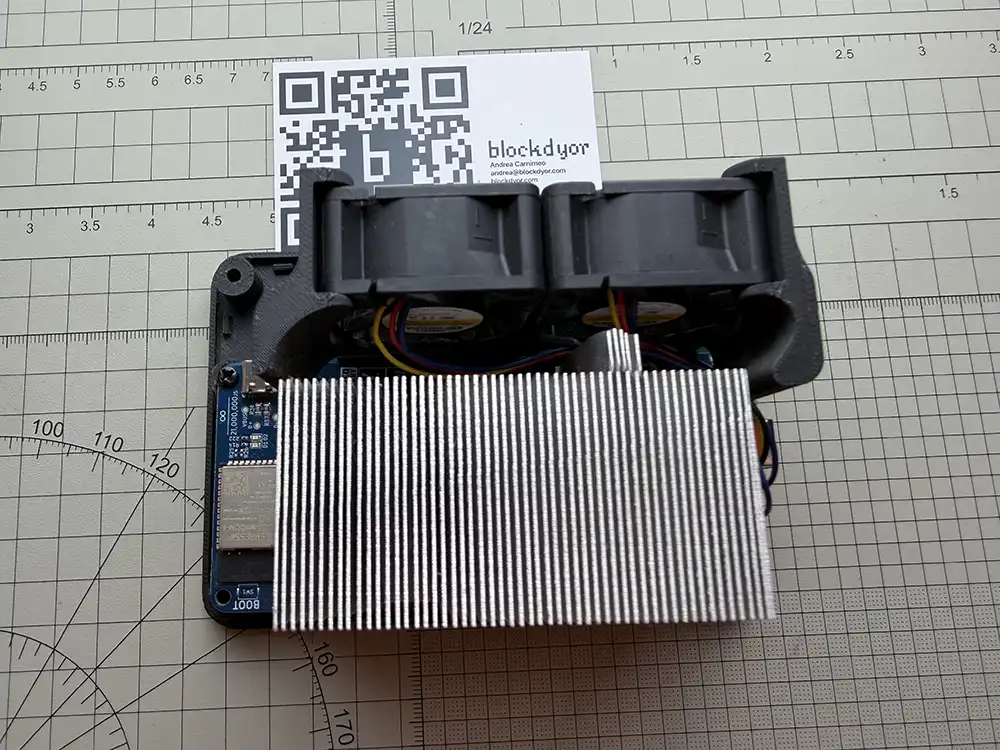
The heatsink is slightly offset from the fans due to the board layout, but it features a conveyor design that channels airflow directly across the entire heatsink surface.
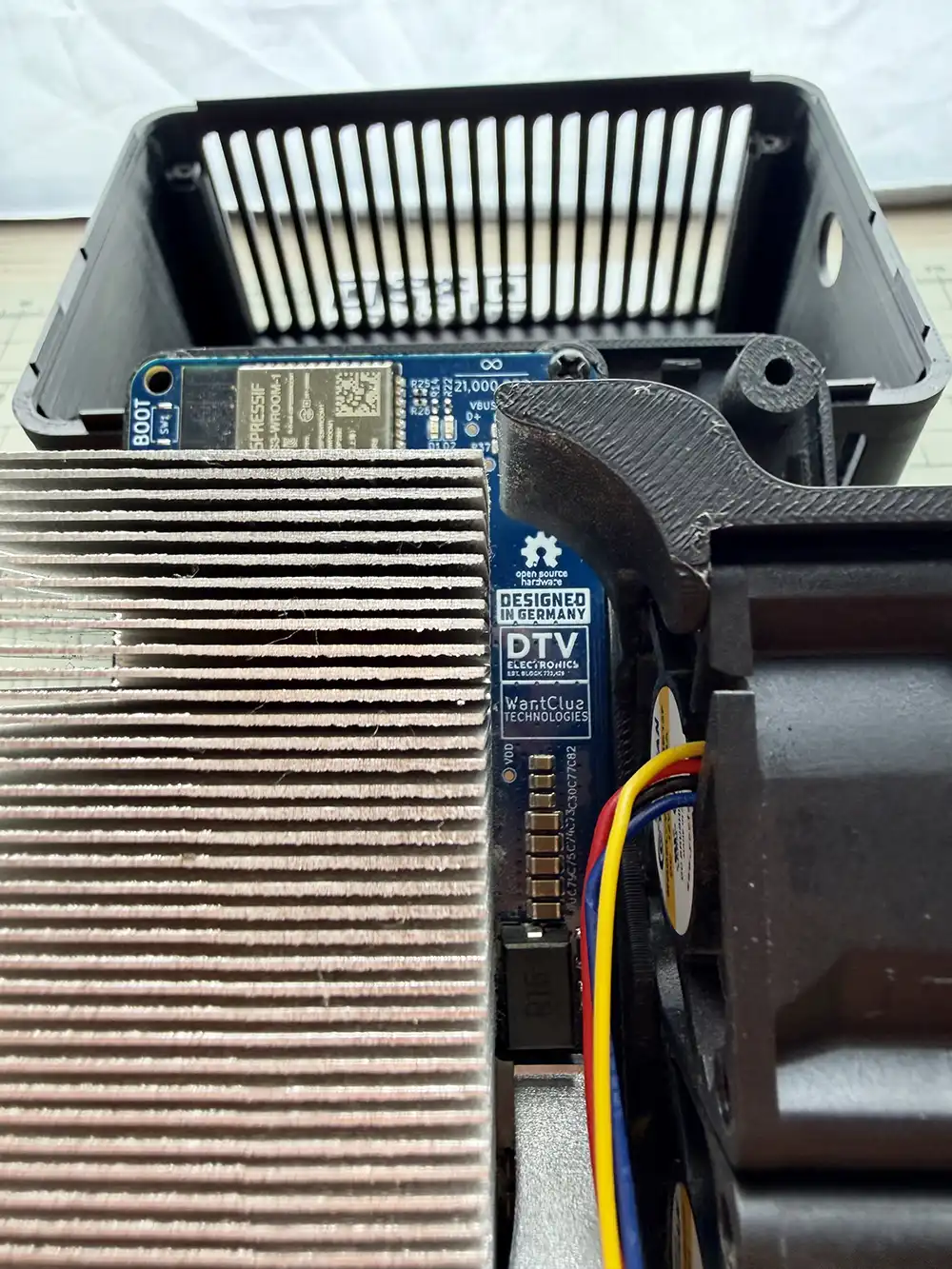
The board has been designed in germany by WantClue Technologies and produced by DTV Electronics as written on the board. The case, the custom heatsink and all airflow CFD analysis was made by "I Am GPIO" of The Solo Mining Co' - a design engineer in the Bitcoin Space.
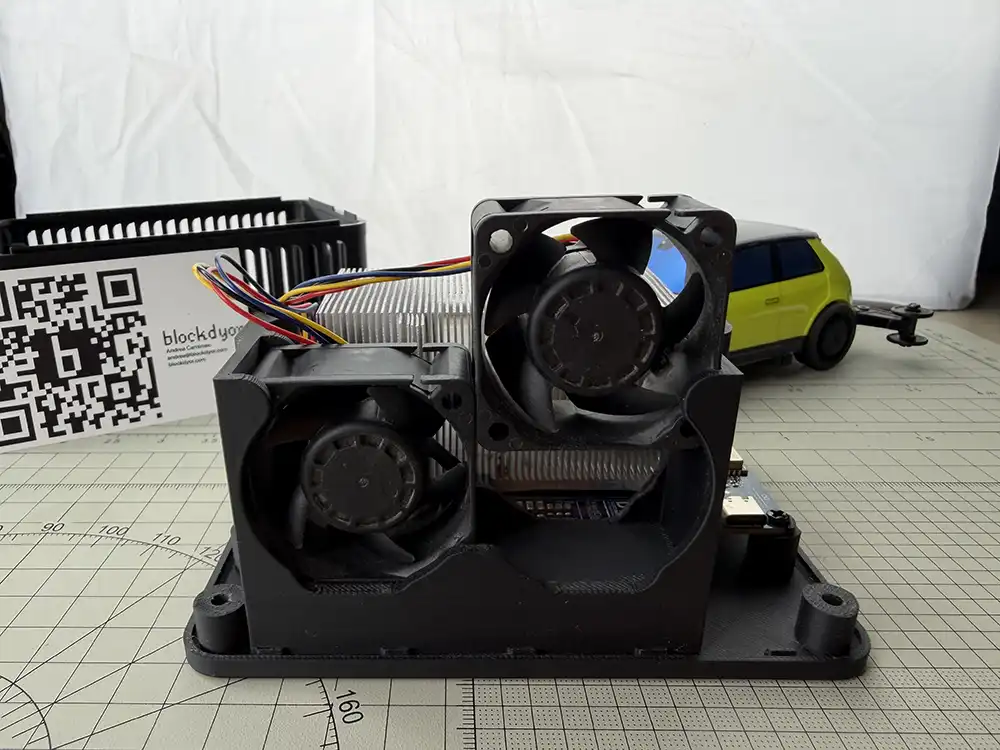
Back to the fans for a moment: they can be removed without any screws, as they simply snap into the 3D-printed case and stay firmly in place. This is an excellent design choice that makes routine cleaning operations quick and easy.
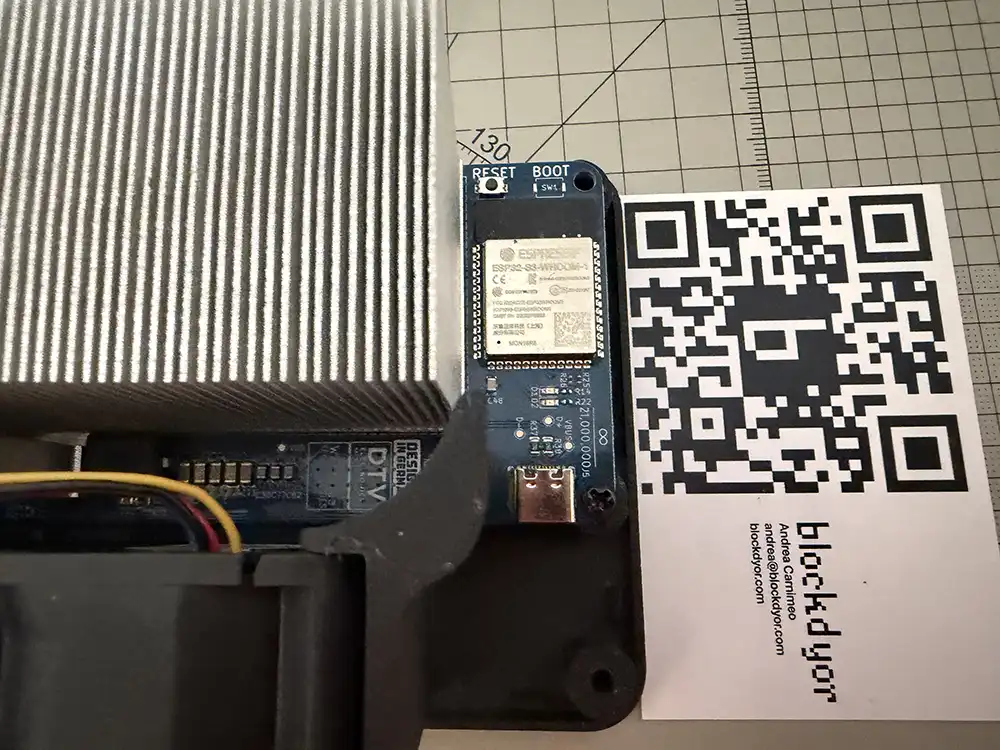
The ESP32-S3-WROOM-1 is the microcontroller that serves as the Bitforge Nano's control center. This compact module manages all mining operations, controls the dual BM1370 ASIC chips, and handles Wi-Fi connectivity. It runs the BitForgeOS web interface, monitors system health (temperature, hashrate, power), controls the dual-fan cooling system, and executes the open-source firmware. Its integrated Wi-Fi eliminates the need for ethernet cables, while its processing power efficiently manages all device functions.
How To Start Mining With The BitForge Nano
To get started with the BitForge Nano:
- Connect the BitForge Nano to power and wait a few seconds for it to boot up.
- On any Wi-Fi enabled device, scan for nearby networks and look for "Nano_XXXX" (where XXXX represents random numbers).
- Connect to that network.
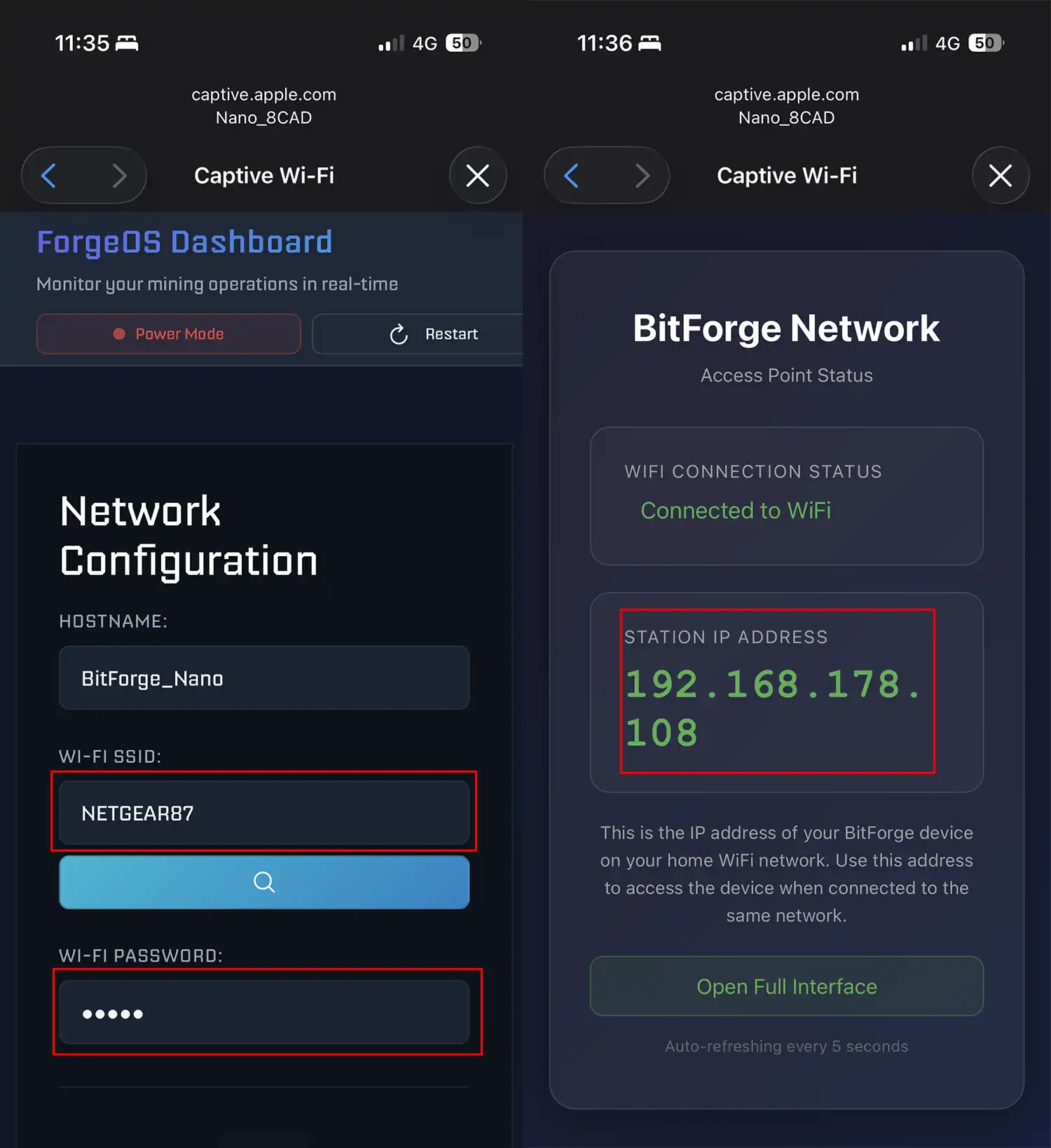
- In the Wi-Fi SSID put your Wi-Fi name and in the Wi-Fi password put the password. Remember that this last field is case sensitive. If everything goes right, you should get the IP address of the BitForge nano. Now you can go to a browser and insert that IP address.
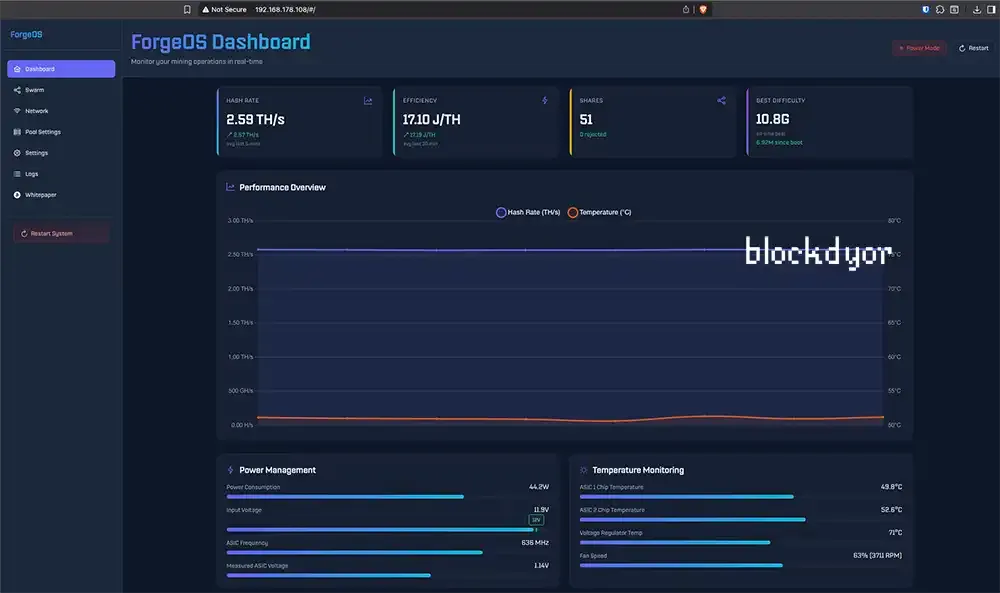
- After putting the IP address in the address bar of a browser of a computer/mobile connected on the same network, you will finally be able to see the ForgeOS dashboard, setup your pool and start mining.
BitForge Nano Alternatives
While the Bitforge Nano leads the dual-chip revolution, two notable alternatives dominate the home mining space: the Canaan Avalon Nano 3S and the Bitaxe Gamma. Each offers distinct advantages depending on your priorities and budget.
Canaan Avalon Nano 3S
The Canaan Avalon Nano 3S represents the corporate approach to home mining. Manufactured by Canaan, one of the oldest and most established ASIC producers, this device brings industrial-grade reliability to the home market.
Key Specifications:
- Hashrate: 6 TH/s
- Power Consumption: 140W
- Efficiency: 23.3 J/TH
- Connectivity: Ethernet and Wi-Fi
- Form Factor: 20x11x5.8cm
- Noise Level: 33dB
- Fans: 2
- Voltage: 100-220V
- Operating Temperature: -5 to 30°C
- Warranty: 360 days
Updated Advantages over Bitforge Nano:
- Much higher raw hashrate (6 TH/s vs 2.6 TH/s - more than double)
- Dual connectivity options (Ethernet + Wi-Fi)
- Backed by established manufacturer with extensive support
- Durable build quality
- Relatively quiet at 33dB
- One year warranty
Updated Disadvantages compared to Bitforge Nano:
- Less efficient (23.3 J/TH vs 15.38 J/TH)
- Proprietary firmware and hardware (not open-source)
- Higher power consumption (140W vs 40W)
- Limited customization options
- Typically higher price point
The 3S is a completely different beast than I initially stated. With 6 TH/s, it delivers over twice the hashrate of the Bitforge Nano. But you're paying for it with significantly higher power draw. Still, the efficiency gap isn't as severe as my incorrect specs suggested. For someone who wants maximum output from a home miner and has decent electricity rates, this is a strong contender.
 Andrea Carnimeo
Bitaxe Gamma
The Bitaxe Gamma is the spiritual predecessor to the Bitforge Nano, representing the previous generation of open-source home mining. It's proven, popular, and has an active community behind it.
Key Specifications:
- Hashrate: Approximately 1.2-1.4 TH/s
- Power Consumption: Around 20W
- Efficiency: ~16 J/TH (depending on configuration)
- Connectivity: Wi-Fi only
- Form Factor: Open-board design
Advantages over Bitforge Nano:
- Lower initial cost
- Lower power consumption
- Established community and extensive documentation
- Multiple proven firmware versions
- Easier to repair due to exposed components
- Better efficiency per TH in some configurations
Disadvantages compared to Bitforge Nano:
- Half the hashrate (1.2-1.4 TH/s vs 2.6 TH/s)
- Single BM1366 chip vs dual BM1370 chips
- Open-board design less aesthetically appealing
- More exposed components (dust, damage risk)
- Less sophisticated cooling system
- No enclosed housing included
The Bitaxe Gamma remains an excellent entry point for miners on a tight budget or those who want to learn the fundamentals without significant investment. Its open design makes it educational, and the lower power draw means minimal electricity costs. However, you're getting roughly half the mining power of the Bitforge Nano.
 Andrea Carnimeo
Comparison Summary
| Feature | Bitforge Nano | Avalon Nano 3S | Bitaxe Gamma |
|---|---|---|---|
| Hashrate | 2.6 TH/s | 3.3 TH/s | 1.2-1.4 TH/s |
| Power | 40W | 55-60W | 15-18W |
| Efficiency | 15.38 J/TH | 17-18 J/TH | 16 J/TH |
| Open Source | Yes | No | Yes |
| Housing | 3D-printed box | Injection-molded | Open board |
| Connectivity | Wi-Fi | Wi-Fi + Ethernet | Wi-Fi |
| ASIC Chips | Dual BM1370 | Single chip | Single BM1366 |
| Price Point | Mid-range | Higher | Budget |
| Best For | Balance & customization | Maximum hashrate | Learning & budget |
All three devices have their place in the home mining ecosystem. The Bitforge Nano strikes the optimal balance for most users, offering dual-chip performance with open-source flexibility at a reasonable price point. The Avalon Nano 3S maximizes hashrate for those who can afford higher operating costs, while the Bitaxe Gamma remains the budget-friendly learning platform that launched the home mining revolution.
Bitforge Nano Pros & Cons
| Pros | Cons |
|---|---|
| ✅ 2.6 TH/s hashrate - more than the double of the Bitaxe Gamma | ❌ No on-device display for monitoring |
| ✅ First dual-chip ASIC miner on the market | ❌ Wi-Fi only - requires stable wireless network |
| ✅ Excellent 15 J/TH efficiency | |
| ✅ German engineering with CE certification | |
| ✅ Advanced cooling system runs quiet and cool | |
| ✅ Fully open-source firmware and hardware | |
| ✅ Clean web interface with three performance modes |
Bottom Line
The BitForge Nano redefines home Bitcoin mining with its dual BM1370 chips delivering 2.6 TH/s, more than double the Bitaxe Gamma, while maintaining 15 J/TH efficiency in a quiet, compact design. This first-to-market dual-chip ASIC miner combines CE-certified German engineering with fully open-source firmware and hardware, ensuring continuous community-driven improvements. Minor limitations like 3D-printed housing and Wi-Fi-only connectivity are negligible compared to its groundbreaking performance. Whether solo mining for decentralization or pool mining for returns, the Bitforge Nano represents the pinnacle of accessible home mining technology. Visit osmu.xyz for community support.
BitForge Nano Evaluation
With a 90/100 blockdyor score, the Bitforge Nano ranks among the top home miners we've evaluated, earning our strong recommendation. The fully open-source hardware and software stand out as massive advantages, fostering community-driven innovation and transparency. Combined with its industry-leading dual-chip performance, excellent efficiency, and German engineering quality, the Bitforge Nano represents the cutting edge of accessible Bitcoin mining. Whether you're a beginner or experienced miner, this device delivers exceptional value and performance for home mining operations.